• The importance of “Problem Framing” in Leadership

    Workplaces generally overestimate problem solving skills in a leader but very few ( and smart ones) invest in problem framing. And quite candidly, it’s a real superpower, a secret sauce if you will!

    Most messy business situations are not straightforward “solve X”. The next layer of questions is where the magic is – What exactly is the problem here? Whose problem is it really? What assumptions are we holding as truth? And are we even asking the right question?

    I’ve seen brilliant teams sprint in the wrong direction simply because someone framed the issue incorrectly in the first 5 minutes.

    People rush in to optimise costs when the real issue is complexity. The classic escape of training solutions given when the real problem is structure. We fix metrics when the real friction is meaning.

    In consulting and in leadership roles, I’ve noticed that the successful leaders aren’t the fastest problem-solvers,
    they’re the ones who pause and reframe.
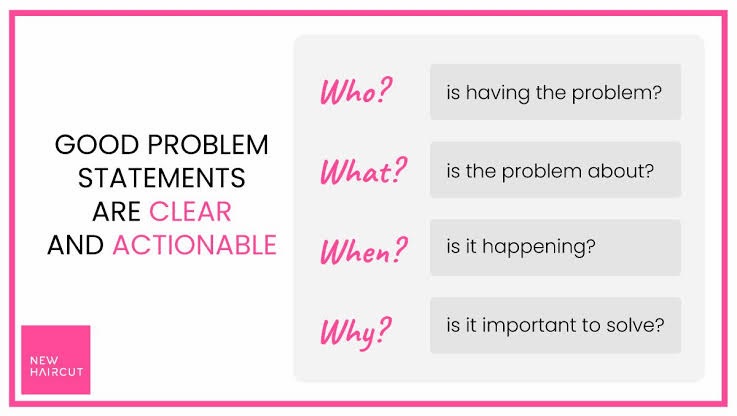
    Some examples of reframing that change outcomes instantly:

    “How do we reduce attrition?” to “Why are people leaving at this exact moment in our employee lifecycle?”

    “How do we increase productivity?” to “What’s blocking people from doing their best work?”

    “How do we fix culture?” to “What behaviours are we rewarding right now?”

    Did you see what happened there?
    The moment you shift the question, new answers suddenly become possible!

    If you’re a leader today (or aspiring to be one), start sharpening this muscle – a) challenge the questions, assumptions and framing, and, b) get comfortable sitting in the ambiguity a little r

    Because the quality of your solution is directly proportional to the quality of your framing.

    And in a world full of people rushing to “fix” the symptom, the ones who slow down will see what everyone else is missing to “cure” the disease.

  • Over the past weeks, headlines about abuse of vulnerable humans, corruption scandals and institutional failures have dominated our feeds. If you’ve felt the pull to read everything, to understand how deep it goes, you’re not alone.

    But what we don’t talk about enough is the cost of immersion in darkness.

    Deep consumption of disturbing content leads to:

    • Compassion fatigue (caring less, not more)
    • Vicarious trauma and intrusive thoughts
    • Learned helplessness and paralysis
    • A fundamentally distorted view of humanity

    The people who care most are often the ones who hurt themselves most by over-consuming this content.

    So how much do you actually need to know?

    Here is my framework –
    “Know enough to act, not everything that happened.”

    You need to understand:
    The patterns and systemic failures
    What accountability measures are in place
    How to protect your community
    Where to direct your energy for change

    You don’t need to:
    Read every graphic detail
    Follow daily speculation
    Consume trauma testimony unless professionally necessary
    Spend hours connecting dots online

    The details of trauma don’t make you more informed. They make you more traumatized.

    So how can you stay engaged without losing yourself?

    PROTECT YOURSELF:

    • Limit consumption to 15-20 minutes from trusted sources, 1-2x/week
    • Avoid graphic content entirely
    • Don’t read before bed or first thing in the morning
    • If it makes you feel sick, you can stop

    TRANSFORM AWARENESS INTO ACTION:

    • Learn warning signs of abuse in your community
    • Support survivor-focused organizations
    • Advocate for transparency and accountability
    • Model healthy relationships and power dynamics
    • Practice deliberate kindness

    See, these revelations matter. But they reveal breakdowns in systems, not the fundamental nature of humanity.

    For every perpetrator, there are millions showing up with integrity every single day.

    Evil persists when good people either look away OR when they destroy themselves staring into the abyss until they can’t function.

    The world needs you clear-eyed and soft-hearted,
    informed but not broken,
    angry enough to demand change but hopeful enough to believe it’s possible.

    Your intact mental health is essential because you cannot help others if you’ve traumatized yourself into numbness.

    Know enough to be part of the solution. Protect yourself enough to stay capable of compassion. Act in your sphere of influence.

    The most revolutionary thing you can do in the face of cruelty is to remain determinedly kind, fiercely protective of the vulnerable, and committed to building something better.

    Take care of yourself. Take care of each other.

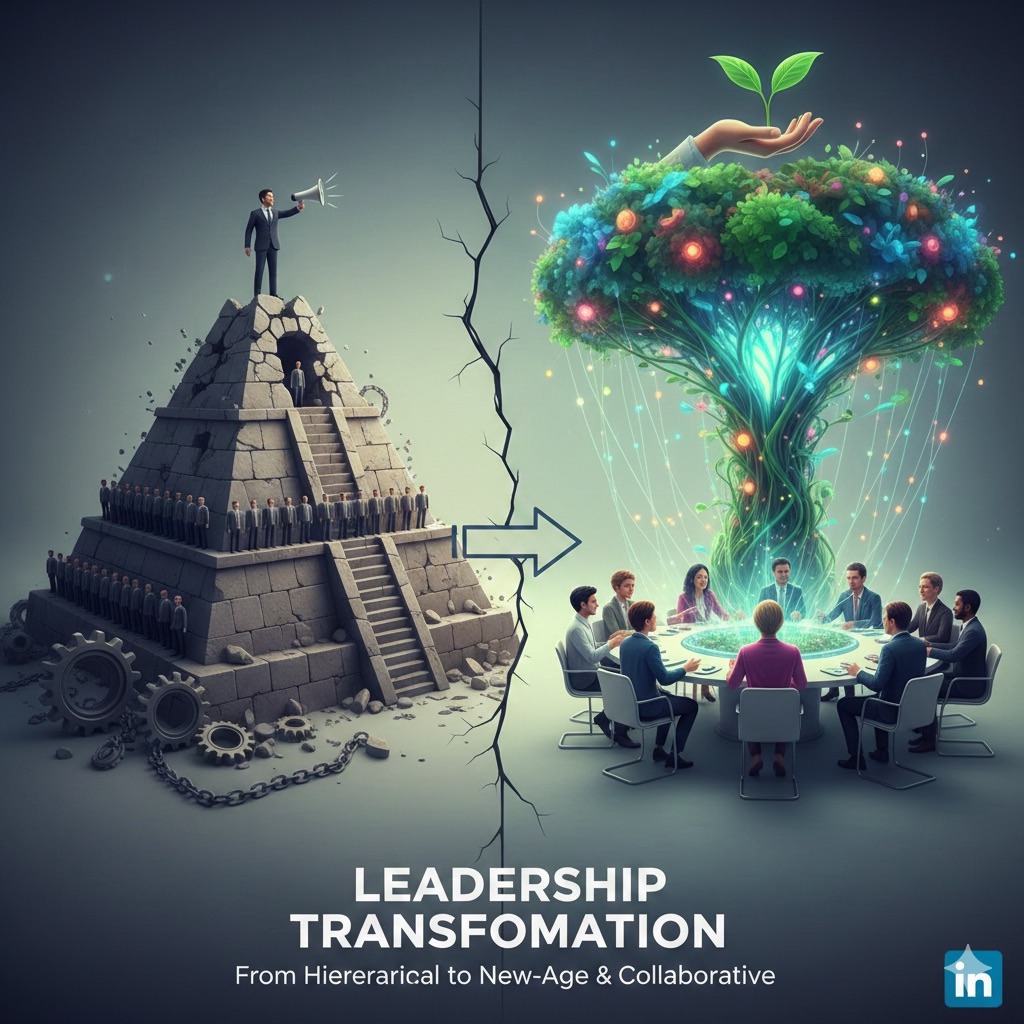
  • It’s fascinating how the definition of “Good Leadership” keeps flipping. Some of the very things that were celebrated 10–15 years ago are seen as red flags.

    Here are a few powerful leadership reversals I’ve been noticing

    1) Big Teams – to – Lean Teams; Influence based Leadership

    Past – The more people you managed, the more important you were.
    Now – Lean teams indicate efficiency. Big teams often mean bloated costs, unclear priorities and slowing execution.

    Leadership mantra today is “Do more with less, strategically.”

    2) Directive leaders – to – Context driven work

    Past – Strong leaders “told people what to do.”
    Now – Direction without dialogue feels irrelevant to talent. People want autonomy and purpose.

    Leadership signal today – Coach! don’t command!

    3) Volume of work – to – Commitment

    Past – “First in, last out” proved loyalty.
    Now – Burnout cultures are talent killers.

    Leadership signal today – sustainable pace > performative hours.

    4) Perfectionism – to – Professionalism

    Past – Leaders were expected to be flawless and unemotional.
    Now– Perfection signals rigidity, insecurity, and slow decision cycles.

    Leadership signal today – progress > perfection.

    5) Knowing it all – to – Being a Leader

    Past – Leaders were the only or top experts.
    Now – Learning agility beats subject-matter dominance every single time.

    Leadership signal today – curiosity > certainty.

    6) Hierarchy – to – Clarity

    Past – Layers created structure.
    Now– Layers slow everything down. Flattening isn’t a trend, it’s a necessity.

    Leadership signal today – access, speed, collaboration.

    7) Competition inside teams – to – performance

    Past: Internal rivalry was “healthy.”
    Now: Collaboration is the real competitive advantage.

    Leadership signal today – collective intelligence > individual heroics.

    So what’s replacing the old model?

    Lean teams
    Servant leadership
    Shared decision-making
    Psychological safety
    Flexibility
    Coaching
    Outcome obsession (not activity obsession)

    Leadership used to be about control. Now it’s about creating the conditions where others thrive.

    The companies attracting and keeping the best talent are the ones evolving fastest on this shift.

    What old “flexes” according to you are turning into “red flags?”

  • Whoever you are, wherever you are – if you have decided to become the best version of yourself, if you want to reach your potential, if you believe you can be an asset to the world – this is a great place to being that journey.

    You need to follow three simple steps in no stringent way, in order to become a better leader:

    • Get to know the real you – your likes, dislikes, emotions, strengths and triggers. Write about yourself, connect with nature, ask others, take tests – whatever works for you
    • Get clear about what your goal is – what do you want from yourself, your life, your efforts – make a plan
    • Start taking baby steps – Even before you sign up for a fancy development program, make massive changes or look for another human to help you, start making tiny shifts in your mind and life, micro changes if you will, towards your goal!

    I congratulate you on your desire to become a better version of yourself – that is half the battle won. Start walking the path anyway, and Korleed is here to help you on journey.