It’s fascinating how the definition of “Good Leadership” keeps flipping. Some of the very things that were celebrated 10–15 years ago are seen as red flags.
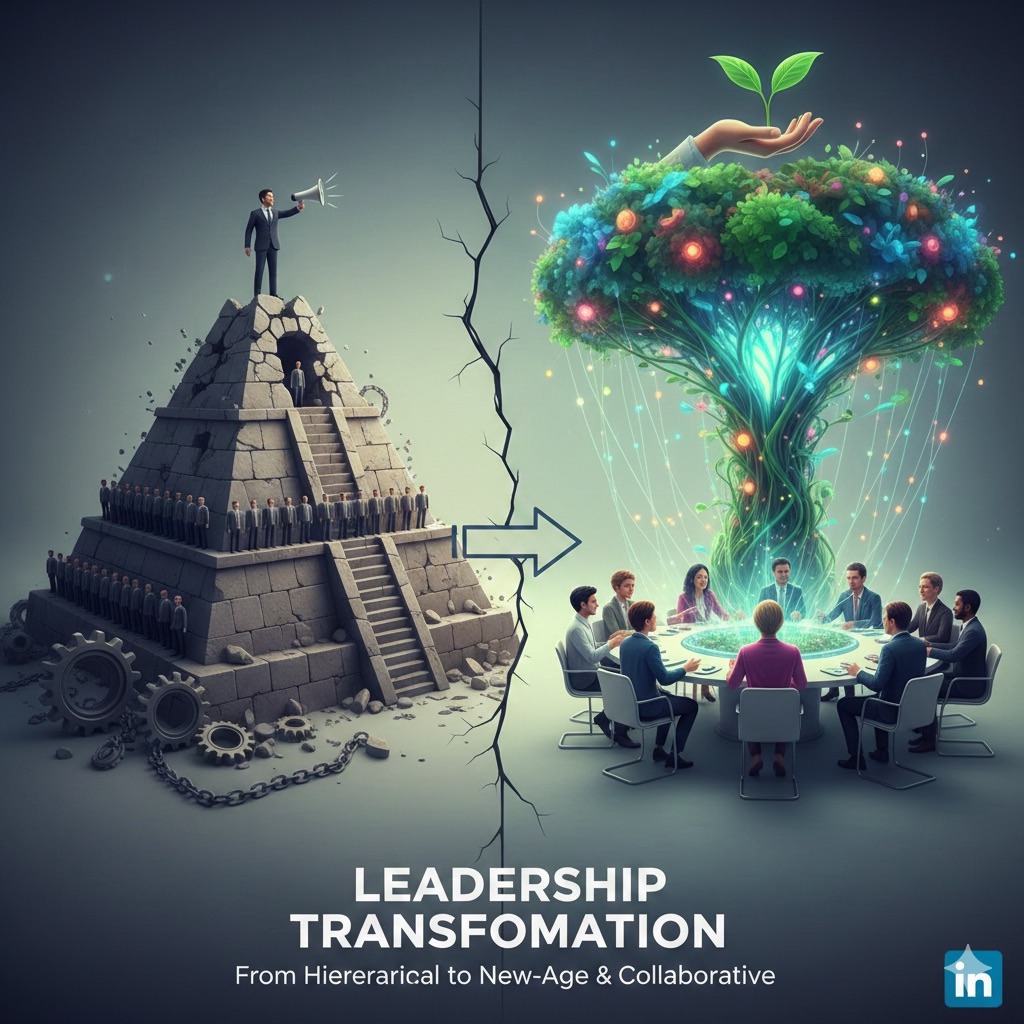
Here are a few powerful leadership reversals I’ve been noticing
1) Big Teams – to – Lean Teams; Influence based Leadership
Past – The more people you managed, the more important you were.
Now – Lean teams indicate efficiency. Big teams often mean bloated costs, unclear priorities and slowing execution.
Leadership mantra today is “Do more with less, strategically.”
2) Directive leaders – to – Context driven work
Past – Strong leaders “told people what to do.”
Now – Direction without dialogue feels irrelevant to talent. People want autonomy and purpose.
Leadership signal today – Coach! don’t command!
3) Volume of work – to – Commitment
Past – “First in, last out” proved loyalty.
Now – Burnout cultures are talent killers.
Leadership signal today – sustainable pace > performative hours.
4) Perfectionism – to – Professionalism
Past – Leaders were expected to be flawless and unemotional.
Now– Perfection signals rigidity, insecurity, and slow decision cycles.
Leadership signal today – progress > perfection.
5) Knowing it all – to – Being a Leader
Past – Leaders were the only or top experts.
Now – Learning agility beats subject-matter dominance every single time.
Leadership signal today – curiosity > certainty.
6) Hierarchy – to – Clarity
Past – Layers created structure.
Now– Layers slow everything down. Flattening isn’t a trend, it’s a necessity.
Leadership signal today – access, speed, collaboration.
7) Competition inside teams – to – performance
Past: Internal rivalry was “healthy.”
Now: Collaboration is the real competitive advantage.
Leadership signal today – collective intelligence > individual heroics.

So what’s replacing the old model?
Lean teams
Servant leadership
Shared decision-making
Psychological safety
Flexibility
Coaching
Outcome obsession (not activity obsession)
Leadership used to be about control. Now it’s about creating the conditions where others thrive.
The companies attracting and keeping the best talent are the ones evolving fastest on this shift.
What old “flexes” according to you are turning into “red flags?”

 Where Strategy Meets Soul
Leave a comment